









Bristol Stool Chart: A Simple Guide to Understanding Your Bowel Movements
What is the Bristol stool chart?
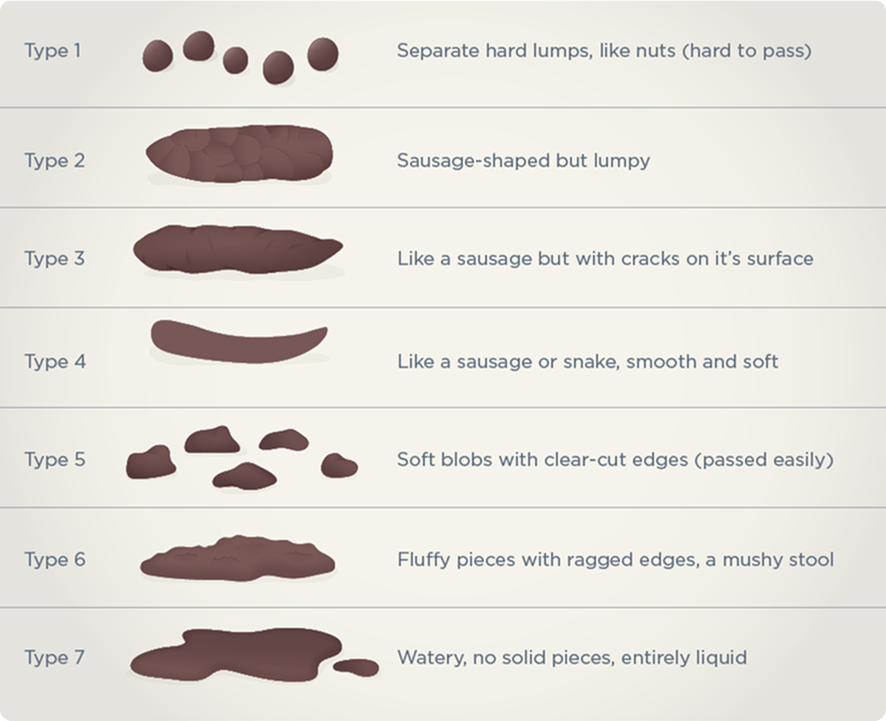
The Bristol stool chart is a simple guide that helps describe different stool types based on their shape and consistency. It divides stools into seven categories, making it easier to understand when something may need attention.
Many people feel unsure about how to describe their bowel movements. The Bristol stool chart gives you clear reference points, so conversations with your doctor or nurse become easier and more precise.
What does “normal” look like?
On the Bristol stool chart, types 3 and 4 are considered typical.
- Type 3: Like a sausage with cracks on the surface
- Type 4: Smooth, soft, and sausage-shaped
These stool types are usually easy to pass and do not cause discomfort. Bowel habits vary from person to person, but stools that are soft and comfortable to pass are generally a good sign.
The Bristol Stool Scale
What if your stools are hard?
Types 1 and 2 are hard, dry, or lumpy. They can be difficult or painful to pass and often suggest constipation.
Hard stools may happen if the bowel moves slowly (sometimes called slow transit), if you are dehydrated, or if fibre intake is low. If you regularly notice type 1 or 2 stools, you may want to read more about chronic constipation or speak with a healthcare professional.
What if your stools are hard?
Types 5, 6, and 7 are softer and may be harder to control.
Very loose or liquid stools can sometimes be linked to diarrhoea, irritable bowel syndrome (IBS), or faecal incontinence also known as bowel incontinence. If this happens often or affects your daily life, it is important to seek medical advice.
Why the Bristol stool chart matters
The Bristol stool chart helps you notice patterns and changes over time. Small changes are normal, but ongoing shifts in stool type may signal bowel dysfunction.
The Bristol stool chart can be a helpful starting point for understanding your bowel health. By using the Bristol stool chart, you can clearly explain your symptoms.
Learn more

How to treat bowel dysfunction?
The process of managing faecal incontinence or constipation is called “bowel management”.

Personal stories
Read personal stories from children, parents, and families sharing their experiences of managing bowel care as part of everyday family life.

Our products
Find the products designed to fit seamlessly into real life and can help restore a sense of control and self-confidence.